
mParivahan Insurance Check: What Your Result Means (2026)
Finding your vehicle’s insurance status on mParivahan takes seconds. The harder part is knowing what to do with what you see. A green date can still hide a problem, a blank field doesn’t always mean you’re uninsured, and in 2026 the insurance date on your Vahan record matters far more than it used to.
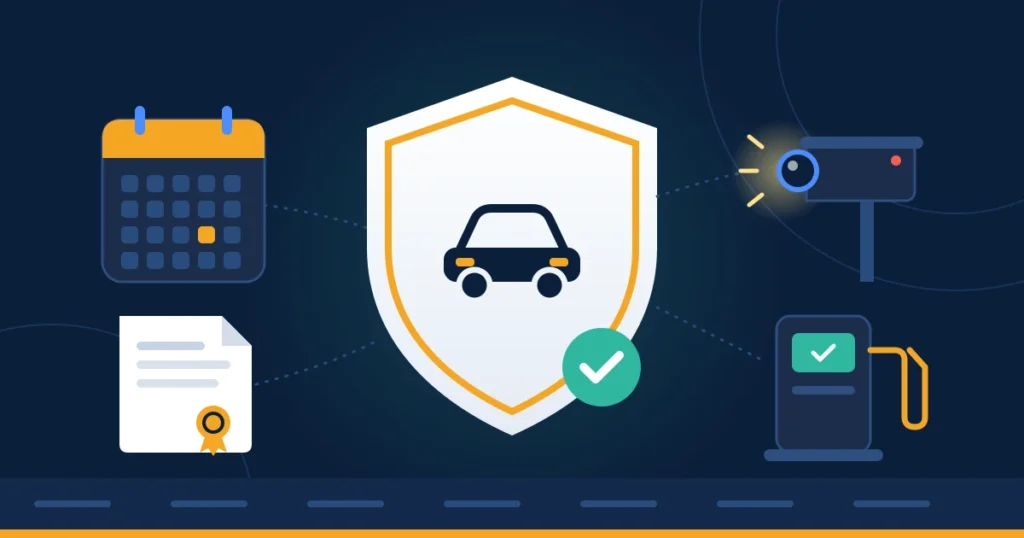
This guide starts with the check itself and then explains every result you might get.
The 30-Second Check
In the app: open NextGen mParivahan → RC Search → enter the registration number with no spaces. Look at the Insurance Upto field. If your vehicle is saved as a Virtual RC, the same date appears on your dashboard.
On the web: vahan.parivahan.gov.in → Know Your Vehicle Details → log in with mobile OTP → search the registration number.
For policy details: Vahan shows only the validity date, not your policy number or coverage. For more, use the Insurance Information Bureau (IIB) lookup at iib.gov.in. It holds policy records for policies issued from 1 April 2010 onward.
That’s the check. Now let’s read the result.
Reading Your Result
Result A: A future date (“Valid”)
Your policy is on record and active. Two things to check before you relax:
- How close is the date? If it’s within 30 days, renew now. After a policy lapses, you have a 90-day window to renew without losing your No Claim Bonus, which can be worth up to 50% off your own-damage premium. That window applies to your discount, not to driving: you’re uninsured from the day after expiry.
- Is it the policy you think it is? If you bought a new vehicle with a long-term third-party (TP) policy and a separate yearly own-damage policy, the date shown may relate to only one of them. Your own-damage cover could expire earlier. Check both dates in your insurer’s app.
Result B: A past date (“Expired”)
If you haven’t renewed, the vehicle is uninsured. Driving it is an offence under Section 196 of the Motor Vehicles Act, with a fine of ₹2,000 and/or up to three months in jail for a first offence (₹4,000 for a repeat). More importantly, you would personally owe any third-party compensation after an accident. Renew before driving it again. A third-party-only policy can be bought online in minutes.
If you have already renewed, the record simply hasn’t updated. Insurers report policies to the central database, and there can be a delay. Wait 2–3 days. If it still shows the old date, ask your insurer to confirm they have uploaded the policy. Until it updates, keep the policy PDF on your phone.
Result C: Blank, “NA”, or no insurance data
This can mean any of these:
- The policy was never reported to the system. This is common for older policies and some smaller insurers.
- The vehicle has been uninsured for a long time.
- The record has a data problem, such as a chassis or registration number that doesn’t match on the policy.
Fix: check the vehicle on IIB. If IIB shows an active policy that Vahan doesn’t, ask your insurer to resubmit the data, and send them your RC so they can correct any mismatched details. If neither IIB nor Vahan shows a policy and you hold one, it’s possible the policy itself is fake; see Mistake 1 below.
Result D: A different insurer, or dates you don’t recognise
On your own vehicle, this usually means an agent bought a policy from a different insurer than the one you asked for, or a policy was issued against the wrong registration number. Call the insurer named on Vahan to confirm.
On a used vehicle you’re buying, it just shows the seller’s current cover. Remember that the policy must be transferred to your name within 14 days of the ownership change, or the own-damage part of the cover is at risk.
Why This Date Matters More in 2026
In August 2026, the Supreme Court issued major directions on motor insurance enforcement in National Insurance Co. Ltd. v. Thungala Dhana Laxmi. The scale of the problem behind it: about 16.5 crore of India’s 30.5 crore registered vehicles are uninsured, and around 22% of road accidents involve uninsured vehicles.
What the Court directed, and what it means for you:
| Direction | What it means for you |
|---|---|
| ANPR cameras linked to Vahan and IIB | Uninsured vehicles can be detected automatically, and e-challans issued without any officer stopping you |
| Real-time insurance checks on police handheld devices | A roadside check now shows whether your insurance is valid, not just your papers |
| “No insurance, no fuel” pilot | Petrol pumps may verify insurance through number-plate cameras before fuelling. This is a pilot, not yet a national rule |
| Longer mandatory third-party cover | New cars: 4 years (up from 3). New two-wheelers: 6 years (up from 5) |
| Standard policy structure | A basic third-party policy, with clearly separated optional covers for occupants, personal accident and own damage |
The Court asked IRDAI to issue directions on the longer cover immediately. Implementation details, including the exact start date for new purchases, depend on IRDAI and insurers, so ask your dealer which tenure your new vehicle’s policy carries.
What this means in practice: the “Insurance Upto” date on your Vahan record is becoming the date cameras, police devices and possibly fuel pumps check. If your renewal hasn’t reached the database, you could be treated as uninsured even though you’ve paid. That’s why Result B’s advice to follow up with your insurer matters more than ever.
Scenario Playbook
After an accident with another vehicle
- Search the other vehicle’s number in mParivahan right away and screenshot the Insurance Upto result with the time visible.
- Valid insurance means your third-party claim has an insurer to pursue. Give the number to the police and your insurer.
- Expired insurance means the owner is personally liable. Make sure your FIR records this.
- Hit-and-run with an unknown vehicle: victims can claim government compensation under the hit-and-run scheme: ₹2 lakh for death and ₹50,000 for grievous injury. Apply through the claims enquiry officer in your district.
Before buying a used vehicle
Check that the insurance is valid, and then also check on IIB whether the vehicle has a history of claims. A car with several large claims may have been in serious accidents. Then add insurance transfer to your post-purchase checklist alongside the RC transfer.
At renewal time
Renew before the expiry date. Within a week, check that the new date appears on Vahan. If it doesn’t, follow up with your insurer before the old date passes, not after.
After selling your vehicle
Once the RC transfer is complete, cancel or transfer your policy. Until the RC transfer goes through, you’re still the owner on record, so keep the vehicle insured.
Terms the Record Won’t Explain
- Third-party (TP) cover: pays for injury, death or property damage you cause to others. It is legally mandatory.
- Own-damage (OD) cover: pays for damage to your own vehicle. It is optional, and can be bought on its own alongside a long-term TP policy.
- Comprehensive policy: TP and OD together in one policy.
- Compulsory personal accident (CPA): cover of ₹15 lakh for the owner-driver. It is required unless you already have equivalent personal accident cover.
- No Claim Bonus (NCB): a discount on the OD premium for claim-free years. It stays with you, not the vehicle, and lapses if you don’t renew within 90 days of expiry.
- IDV (Insured Declared Value): the maximum the insurer will pay if your vehicle is stolen or written off. It’s the current market value, not the price you paid.
Six Mistakes That Cost Money
- Buying insurance from a roadside agent without checking it. Fake policy documents exist. A genuine policy appears on the insurer’s website and on IIB within days.
- Assuming the date on Vahan covers everything. Your separate own-damage policy may expire earlier than your long-term TP policy.
- Letting a policy lapse “for a few days”. Driving even one day without cover makes you personally liable, and you lose the NCB if the gap goes past 90 days.
- Not transferring insurance after buying a used vehicle. If your name isn’t on the policy, an own-damage claim can be rejected.
- Ignoring a renewed policy that hasn’t updated on Vahan. In 2026 the automated systems (ANPR cameras and police devices) check Vahan, not the PDF on your phone.
- Paying via a “renew now” SMS link. Renew only on the insurer’s official website or app, or through a registered broker.
FAQs
- Does mParivahan show my policy number?
No. It shows only the validity date. Use IIB or your insurer’s app for policy details. - Can I check another person’s vehicle insurance?
Yes. Validity status is public through RC Search. Policy details are not. - Will cameras really fine me for no insurance?
The Supreme Court has directed that cameras be linked to insurance records. How quickly this is rolled out varies by state, so keep the date on your record valid at all times. - Is third-party insurance alone enough legally?
Yes. Only third-party cover is mandatory, though it pays nothing towards damage to your own vehicle.