
mParivahan Driving Licence: Read & Verify Your DL (2026)
Most people add their driving licence to mParivahan once and only open it again when a traffic officer asks. Yet the DL record in the app holds information that answers practical questions: which vehicles you can legally drive, when each part of your licence expires, whether your licence is at risk of suspension, and whether the driver you’re about to hire is actually licensed.
This guide explains how to read that record and act on it.
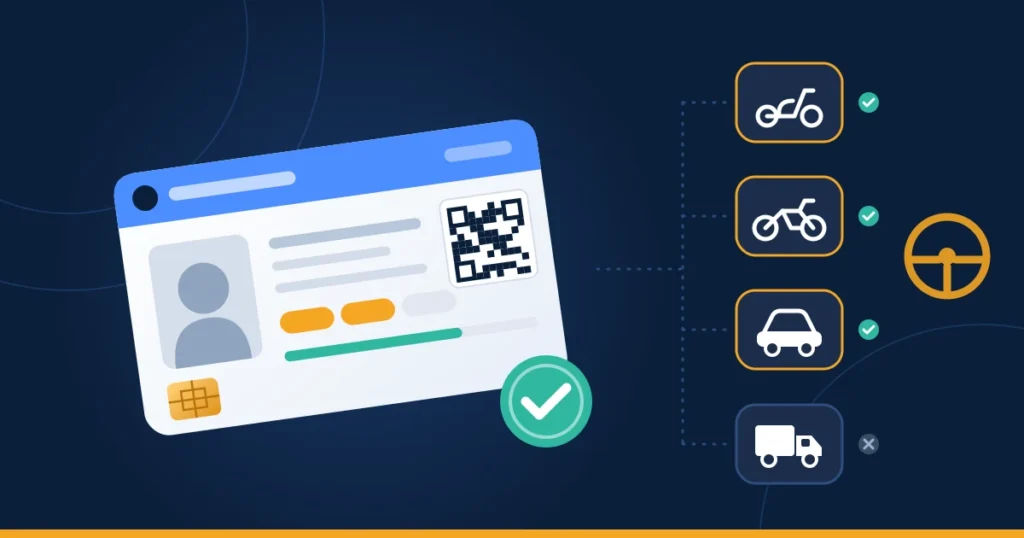
Two DL Tools Inside mParivahan
The app handles driving licences in two separate ways, and people often mix them up:
- Virtual DL (My DL): your own licence, saved to your dashboard with an encrypted QR code. It is legally valid at roadside checks, and you add it with your DL number and date of birth.
- DL Search: looks up the status of any licence number. It’s useful for checking a driver, but it shows only limited, privacy-masked details.
Both read from Sarathi, the national driving licence database, so any change at the RTO shows up in both. For the rest of what the app offers, from violation reporting to accident support, see our complete mParivahan app review.
Decode Your DL Number
A modern Indian DL number has 15 characters, often written with a hyphen or space after the state code (so it looks like 16):
MH12 2018 0012345
- MH: state code (Maharashtra)
- 12: the RTO that issued the licence (Pune)
- 2018: the year the licence was first issued
- 0012345: a seven-digit serial number
Two practical points follow from this:
- The year is the year of first issue, not your latest renewal. A renewed licence keeps its original number. If an employer or a lender asks how long you’ve been driving, the year in your DL number is the answer.
- The state code doesn’t change when you move. A Delhi-issued licence stays a DL-series number even after you renew it in Bengaluru. That’s normal, and you don’t need to “transfer” your licence the way you transfer an RC.
Read Your DL Record, Field by Field
Class of Vehicle (COV) codes
This is the most important part of your licence. The COV codes list exactly what you’re allowed to drive.
| Code | What it covers |
|---|---|
| MC 50CC | Motorcycles up to 50cc (learner licences from age 16) |
| MCWOG | Motorcycles without gears: scooters, mopeds, most electric two-wheelers |
| MCWG | Motorcycles with gears |
| LMV / LMV-NT | Light motor vehicles for private (non-transport) use: cars, SUVs, jeeps |
| TRANS / LMV-TR | Transport endorsement: commercial use such as taxis and goods vehicles |
| e-Rickshaw / e-Cart | Battery-operated rickshaws and carts |
| HGMV / HPMV | Heavy goods or heavy passenger vehicles |
| ADPVEH | Adapted vehicles, modified for drivers with disabilities |
A common surprise: an MCWOG-only licence does not allow you to ride a geared motorcycle. If your licence lists MCWOG and you ride a geared bike, you are legally treated as an unlicensed driver for that vehicle. Your insurer can use this to reject a claim. To drive a new class, you have to add it to your licence (Form 8 on Sarathi) and pass a test for that class.
Non-transport and transport validity
A licence that covers both private and commercial classes shows two separate validity periods:
- Non-transport (private cars and bikes) usually runs for many years.
- Transport (commercial use) must be renewed far more often.
People often keep driving a taxi on a valid private licence after the transport part has expired. Check both dates, not just the first one you see.
Issuing authority, and hazardous goods if applicable
The issuing authority is the RTO that holds your record, and it’s where you’d go for any correction. Drivers who carry dangerous goods have a separate hazardous-goods endorsement, which needs to be renewed more often than an ordinary transport licence.
What You Can Legally Drive: The LMV Weight Question
In November 2024, a Constitution Bench of the Supreme Court settled a long-running dispute. It held that a person with an LMV licence can drive a transport vehicle whose gross vehicle weight is no more than 7,500 kg without a separate transport endorsement for that weight category. Above 7,500 kg, the specific heavy-vehicle class is still required.
This matters mostly for insurance claims. Insurers had been rejecting claims involving light commercial vehicles driven by LMV licence holders, and the ruling closed off that argument. Commercial-use rules for permits and badges still apply separately, so check your state’s requirements if you drive commercially.
DL Status Changes to Watch
Your DL record also shows a status. Active is what you want to see. Two other statuses matter in 2026:
- Suspended: your licence is temporarily invalid. Certain offences carry automatic disqualification periods: riding without a helmet leads to three months’ disqualification, and drunk or dangerous driving can also lead to suspension.
- Disqualified / Revoked: you can’t drive until the period ends or the licence is restored. In the case of revocation, you’d have to qualify again.
The 2026 change: under the amended Central Motor Vehicles Rules, committing five or more traffic offences in a calendar year (counted from 1 January 2026) can lead to your licence being suspended, even if none of the offences were serious. Unpaid challans can also block licence services such as renewal. This is the main reason to check your challans regularly. Our mParivahan challan guide explains the 45-day pay-or-contest rule and how offences are counted.
Verify a Driver Before Handing Over the Keys
If you employ a driver, whether for a family car, a school run, or a small delivery business, check their licence in two minutes before their first day:
- Ask for the DL number, and confirm it matches the physical card or their Virtual DL.
- Run it through DL Search in mParivahan.
- Check these four things:
- Status is Active: not suspended or expired.
- The class matches the vehicle: LMV for a car; a transport endorsement if they’ll drive commercially.
- The validity date is in the future, and for commercial work, the transport date in particular.
- The name matches the person in front of you.
Why it matters: if an unlicensed driver of your vehicle causes an accident, the insurer can pay the third-party victim and then recover the full amount from you, as the owner. A two-minute check protects you from a very large bill.
Ask for the driver’s permission before you check. Use the result only to verify their eligibility, and don’t keep copies of their personal details any longer than you need to.
When Your DL Won’t Show Up in mParivahan
If the app can’t find your licence, the cause is usually one of these:
| Cause | How to tell | Fix |
|---|---|---|
| Old paper or booklet licence that was never digitised | Issued years ago; the number doesn’t follow the modern 15-character format | Visit the issuing RTO with the original licence for digitisation into Sarathi |
| Old-format number | Your number has slashes or a different structure | Ask the RTO for your Sarathi-format number, or search the old number on the Sarathi portal |
| Date of birth mismatch | The record has a different DOB from the one you entered | Enter the DOB exactly as printed; if the record itself is wrong, ask the RTO to correct it |
| Renewal still being processed | You’ve just applied | Wait until the RTO approves it; the status updates within a day or two |
Don’t put off digitising an old licence. Some state transport departments have warned in the past that licences not moved onto Sarathi could become invalid. Fixing it is free and permanent.
Physical Card vs Digital DL in 2026
Your Virtual DL in mParivahan is already legally valid. Some states now don’t print a card at all. Tamil Nadu stopped issuing physical smart-card licences and RCs in September 2026. New applicants get a QR-coded digital licence instead, with paper printouts available at e-Seva centres. Our RC check guide covers Tamil Nadu’s switch in detail, and the same approach applies to licences. If you’re in a state that has made this change, there’s no card to wait for. Just download the digital licence once it’s issued.
Getting a New Licence: The Training Centre Route
For new drivers, there is another route since June 2024. Under the Central Motor Vehicles Rules, accredited driver training centres can train learners and test them. Learners who pass a course at an accredited centre are exempt from the RTO driving test when they apply for a permanent licence.
Before you enrol, confirm the centre is accredited by your state transport department. Non-accredited driving schools still exist, and their certificates don’t give you the exemption.
Your 5-Minute DL Health Check
Do this once a year, or before any long trip:
- [ ] Open your Virtual DL in mParivahan and confirm the status is Active.
- [ ] Check both validity dates if you hold a transport endorsement.
- [ ] Confirm your class codes cover every vehicle you actually drive.
- [ ] Check this year’s challans, and remember the five-offence count.
- [ ] Make sure the mobile number linked to your licence is current, so you get OTPs and challan alerts.
- [ ] If you’re 40 or older, keep in mind that renewal needs a medical certificate (Form 1A).